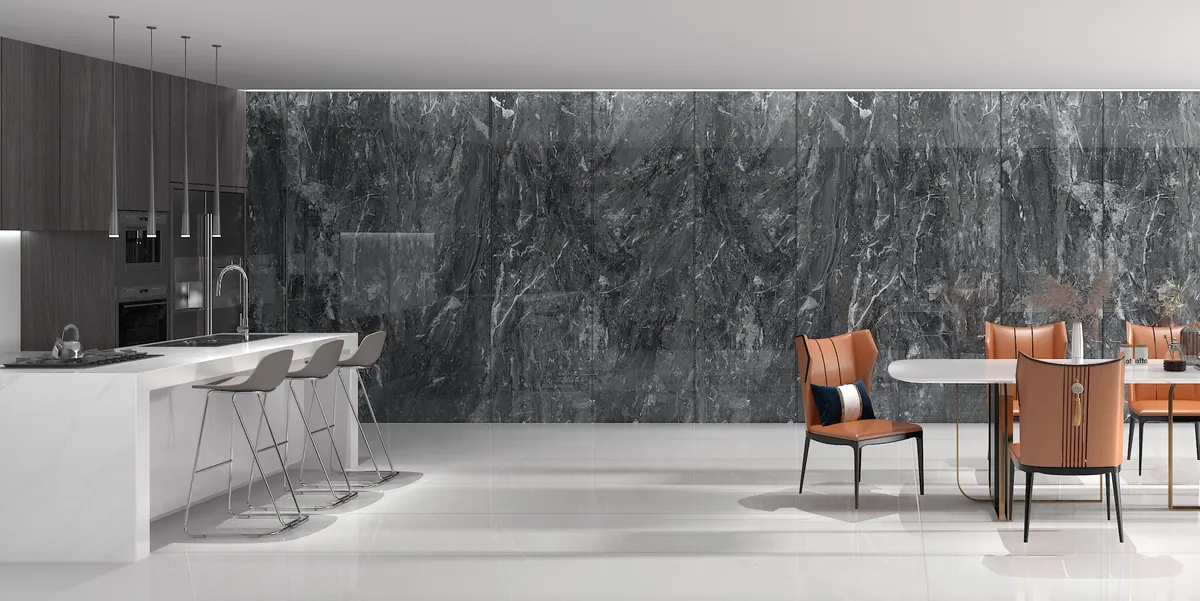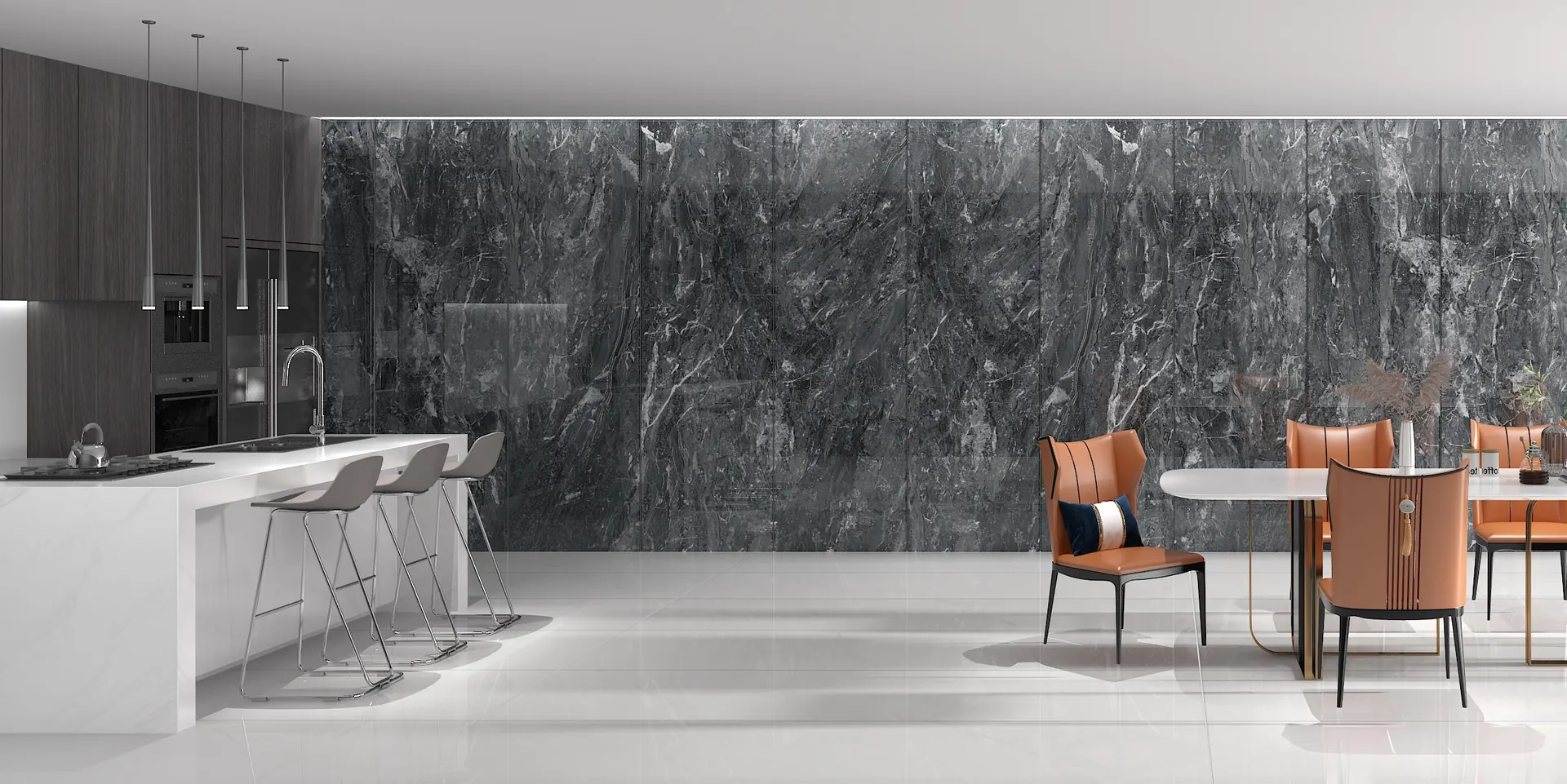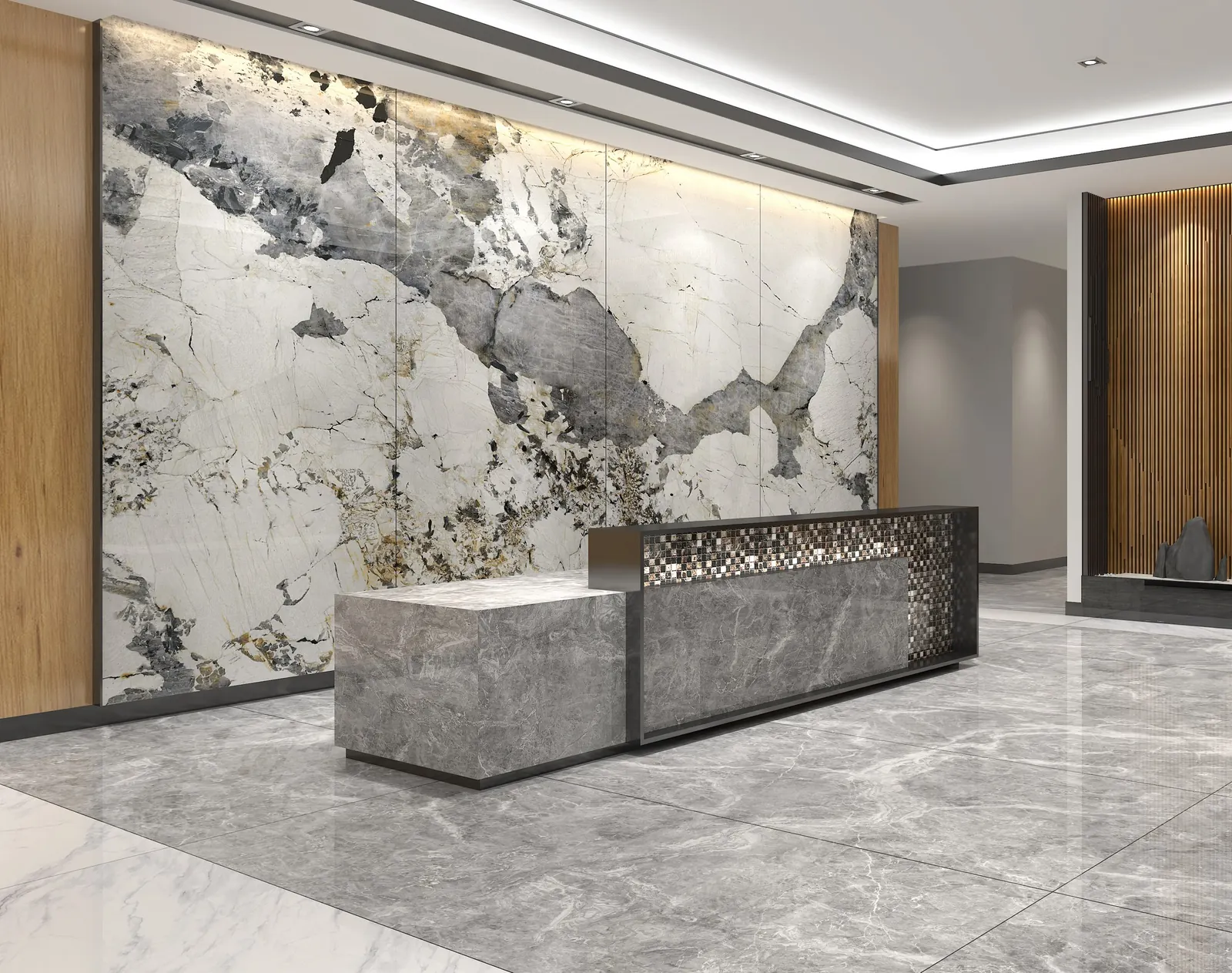
Large-format porcelain slabs have changed what is possible with tile. A single piece can cover a kitchen island, a shower wall or a fireplace surround with almost no joints. They also need more planning than standard tiles.
Sizes and thicknesses
Common slab formats include 1600x3200, 1200x2400, 1200x2700 and 800x2600 mm, with other sizes available. Thinner slabs (around 6 mm) suit walls and cladding over existing surfaces; thicker slabs (around 12 mm and up) suit benchtops and floors. Check the maker's recommendation for each use.
Where slabs work best
- Kitchen benchtops, islands and full-height splashbacks
- Bathroom walls and vanity tops with minimal grout
- Fireplace surrounds and feature walls
- Commercial lobbies, reception desks and lift cores
Planning the install
- Access. Measure stairs, lifts and doorways. A 3.2 m slab has to get into the room.
- Substrate. Large formats need a very flat surface and full adhesive coverage.
- Installer. Use a tiler or fabricator experienced with slabs and the right handling frames.
- Layout. Decide early whether you want bookmatched or continuous veining, so slabs are ordered and cut in sequence.
For specifiers
We provide technical data sheets, installation guidelines and CAD files for the slabs we supply, and can hold stock for staged deliveries. Visit our professional services page.
Frequently asked questions
Can slabs be installed over existing tiles?
Thin slabs can sometimes go over sound, flat existing tiles. Your installer needs to check the substrate and adhesive system first.
Do slabs need special grout?
Joints are few and narrow; a colour-matched grout or sealant is used. Movement joints are still needed, as with any tiled surface.
Want a second opinion? Book a consultation and we will talk it through for your space.
Book a consultation